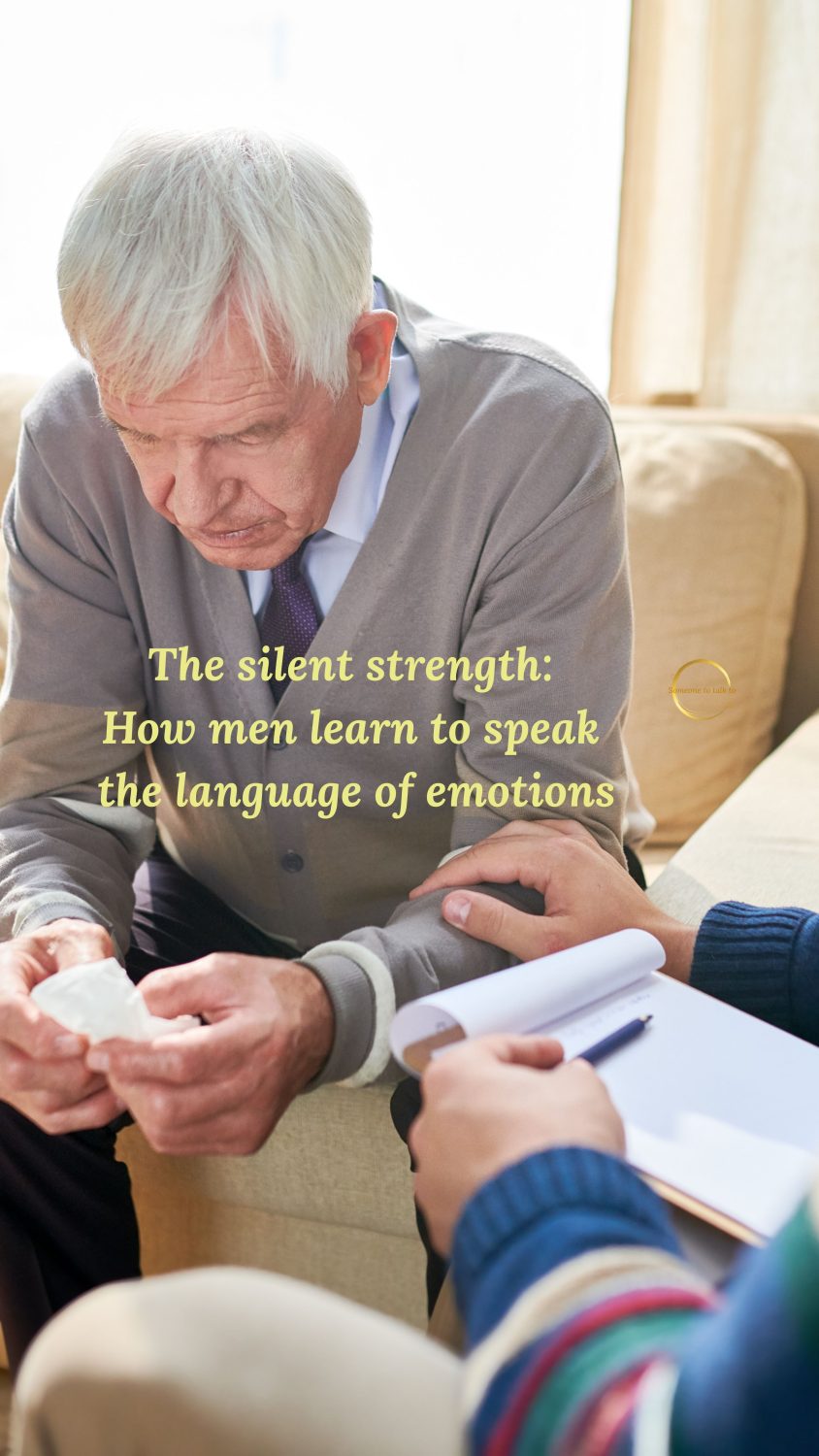
For many men, silence has been a lifelong travel companion.
They’ve been taught, sometimes directly, often quietly, that emotions are dangerous zone.
That strength equals control, and vulnerability equals weakness.
But over the years in my counselling practice, I’ve witnessed a different kind of strength evolving in men: the strength to feel.
Rediscovering an emotional vocabulary
When men first join therapy, they often tell me, “I don’t know what I’m feeling” or “I can’t explain it.”
Genuinely it’s not a lack of willingness, it’s plainly that they were never taught the language of emotions.
So together, we start a process of rediscovery.
We slow down, focus on to the signals of the body, tension in the shoulders, a tight jaw, a heaviness in the chest. Each of these sensations keeps a story.
Sometimes I invite them to describe these sensations using metaphors: “If this weight could speak, what would it say?” or “What colour is your worry today?”
Little by little, words begin to emerge.
And with words comes awareness. And with awareness, healing.
Learning safety in presence
For many men, the therapy room is the first safe space where they can simply be.
No expectations to “perform”, no need to fix or analyse. Just presence.
One of my students, Leown, who attends supervision, shared:
“Attending group supervision with Beata was a crucial component of my professional development, during these sessions I felt listened to and accepted as an individual and as part of a group.
I was never made to feel that I could not speak and share, or that my opinions and thoughts were invalid or irrelevant. In my experience, Beata had a talent for making even the most abstract of subjects relatable on an individual and personal level.”
That feeling of safety, being heard with no evaluation, is often the first turning point.
Once men understand, they don’t have to bury their emotions, they start to see vulnerability not as weakness but as authenticity.
Growth through awareness
I often remind the men I work with that emotional growth is like forming muscle, it takes patience, consistency, and compassion.
We work on spotting emotions, but also on understanding what they are aiming to say.
Anger might hide fear. Anxiety might mask exhaustion. Silence might be a way to protect a hurt part of the self.
As John shared after several sessions:
“Beata was very supportive. Despite my initial resistance, the therapy helped me understand my situation and was helpful. The entire experience was very positive, especially since everything was conducted in a professionally confidence manner.”
When men begin to explore their emotions, they often notice that something shifts not only inside them, but around them.
Relationships soften. Communication deepens. And the world feels a little less weighty.
Personal development as a path back to self
In my approach, I often combine elements of personal development: encouraging curiosity, reflection, and connection to everyday life.
It’s not just about managing anxiety or depression, it’s about rediscovering who you are beneath the roles of provider, partner, son or father.
Sometimes this means learning to have a rest without guilt.
Sometimes it implies saying “no” with confidence.
And sometimes it is permitting oneself to cry, not out of despair, but as an act of release and strength.
As David once wrote:
“The counselling was at my home, and it was ideal for me. I’m very satisfied with the service that I received. The sessions helped me clarified my feelings about my bereavement. Beata provided sympathetic and professional support for one of the worse things that can happen to anyone.”
That clarity is often the real reward, not perfection, but peace.
The courage to feel
True strength is not measured by how much you can suppress, but by how deeply you can connect.
Each time a man sits down in therapy room and says, “I don’t know where to start,” he’s already taken the worthiest step: he’s started.
Because learning to speak the language of emotions isn’t just about labelling feelings.
It’s about returning home, to oneself.
Beata 🤗